
By Audra Koscik
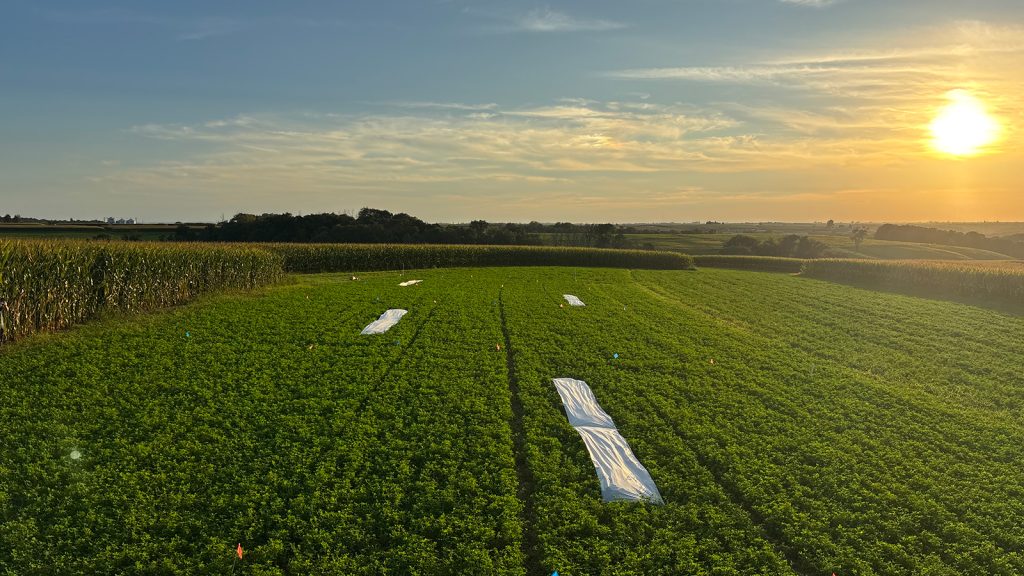
Palmer amaranth and waterhemp, two Amaranthus species, are challenging weed species for growers across the United States. While some weeds can be managed with herbicides, these Amaranthus species are increasingly resistant to herbicides, with populations resistant to at least one herbicide mode of action (MOA) being found across 37 states. These species then flourish on nutrient-rich agricultural land and pose a significant threat to cropping system yields.
Sarah Kezar, an assistant professor in plant and agroecosystem sciences, is studying weed management practices that have the potential to stifle these weeds’ growth and seed production while protecting crop yields and the environment. “A recent survey in Wisconsin conducted by Dr. Rodrigo Werle found that waterhemp resistance to Pursuit® (imazethapyr) and Roundup® (glyphosate) is widespread, with over 85% of populations evaluated being resistant to both herbicides,” says Kezar “When herbicide-resistant individuals escape in-season management efforts, they are able to produce seed and the problem grows.”
“The good news is that the seed of waterhemp has a short longevity in the soil seedbank, with losses estimated to be 95-96% over a 3-year period. Therefore, we are interested in evaluating combinations of crop rotations and full-season weed management practices to target the waterhemp soil seedbank, which is the source of weed problems year after year,” says Kezar. One promising method is adding alfalfa to crop rotations.
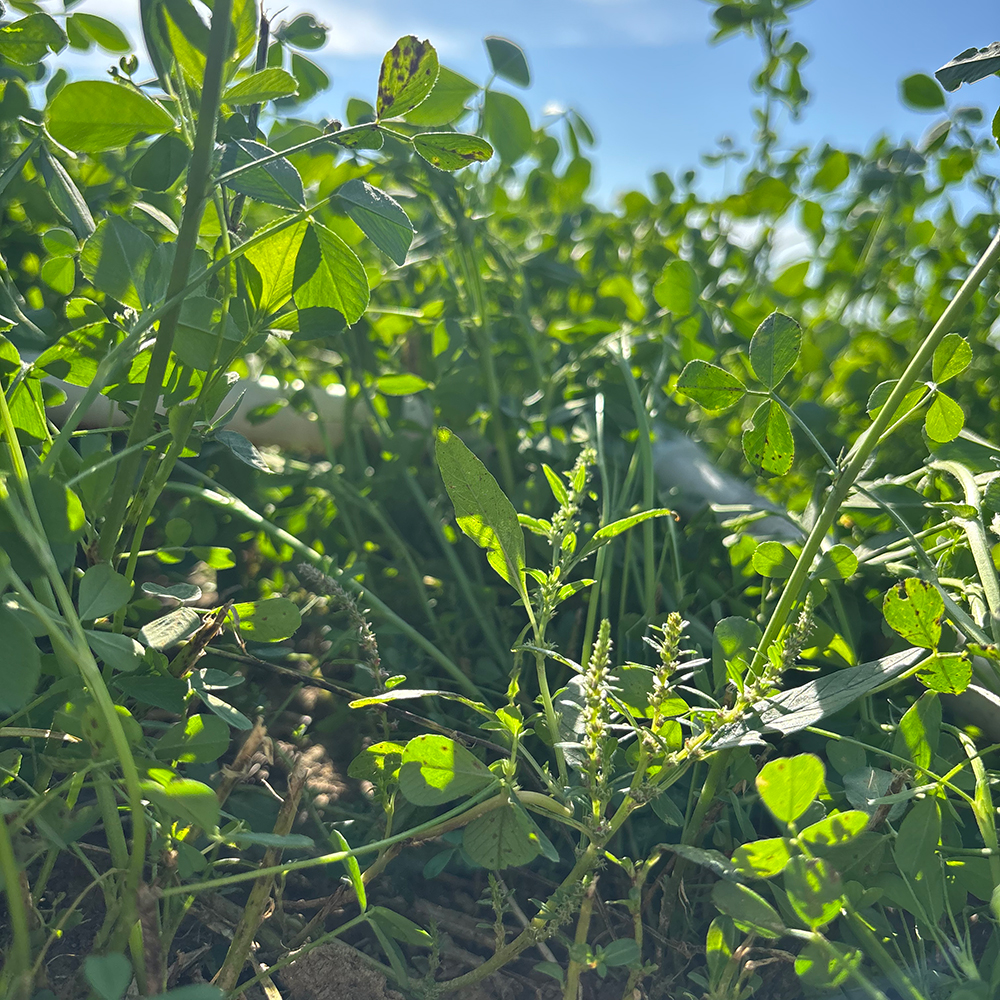
Alfalfa, a crop used to feed dairy cows and other large animals, is a worthy rival of these Amaranthus species for several reasons. To begin with, unlike crops such as soybean or corn, growers cut alfalfa multiple times per season. In the process, they also cut emerging waterhemp and Palmer amaranth plants. Overtime, the alfalfa can establish while these weeds struggle to grow.
Additionally, in many crop rotations, growers would select a new crop to start from seed the next season. These new seedlings would have to compete with the Amaranthus weed seeds remaining in the soil’s seedbank. However, alfalfa is a perennial crop, meaning it regrows year after year without needing to start from a seed.
Research has shown that waterhemp seeds in the seedbank are only viable for four to six years, and become significantly less viable by the third year. Given this, adding alfalfa to a crop rotation for a few years may overpower the viable Amaranthus seeds in the seedbank.
Kezar is studying the impacts of adding alfalfa to crop rotations along with a team of scientists located in Pennsylvania, New Mexico, and Wisconsin. She received a grant from the National Alfalfa and Forage Alliance (NAFA) to conduct this research. “The importance of conducting this research in varying locations is that it will help us truly evaluate the potential for consistent benefits of weed management practices across varying climatic conditions and alfalfa production methods” says Kezar.
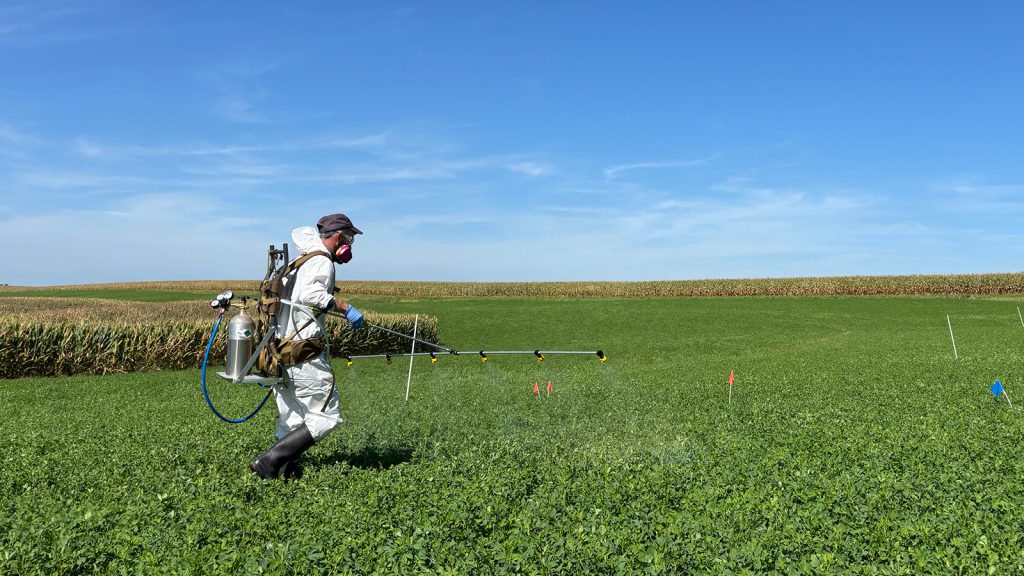
As part of the project, Kezar is studying a handful of weed management practices paired with alfalfa to find the most effective method in each region. Kezar is also studying applying small doses of herbicides (1% of 1X field use rate) when the waterhemp and Palmer amaranth plants are flowering. This method may inhibit any surviving weeds from producing pollen and from producing seeds.
Her research team is collecting soil cores throughout the study to test how many viable waterhemp and Palmer amaranth seeds remain in the seedbank. They are also recording alfalfa yields and how many Amaranthus weeds are able to flower.
Due to the high prevalence of Amaranthus weeds across the United States, this research will take place across multiple states on both small research plots and on farmland. Findings will be shared across the nation through peer-reviewed publications, field day events, and alfalfa-based conferences.
“This multi-state research will provide information on the benefits of initial management in the establishment year of alfalfa and of Amaranthus species in reducing its seedbank over two years of alfalfa production. As the management of herbicide-resistant Amaranthus species is a major issue in annual row crop production, and management is cost prohibitive in annual crop production, our aim is to provide biological information that will demonstrate the benefit of alfalfa as a rotational crop,” says Kezar.