
By Audra Koscik
July 1, 2026, Jeff Endelman, a professor in plant and agroecosystem sciences, began the Potato 2.0 Coordinated Agricultural Project (CAP), an expansive research project that could reshape the potato industry.
The USDA National Institute of Food and Agriculture (NIFA) awarded Endelman and UW-Madison eight million dollars to lead this project. The funds will support research for four years across several institutions in Maine, Michigan, Minnesota, Oregon, Washington, and Wisconsin. In Wisconsin, research will take place at UW-Madison’s Rhinelander Agricultural Research Station, Hancock Agricultural Research Station, and Walnut Street Greenhouse.
The project centers on revolutionizing potato variety development. Domesticated potatoes currently have a tetraploid genome, meaning their chromosomes come in sets of four. Scientists can breed potato by crossing two tetraploid varieties. However, their offspring can have an unruly variety of traits. “It’s hard to totally eliminate deleterious versions of genes or to completely ‘fix’ the good versions of the genes,” says Endelman.
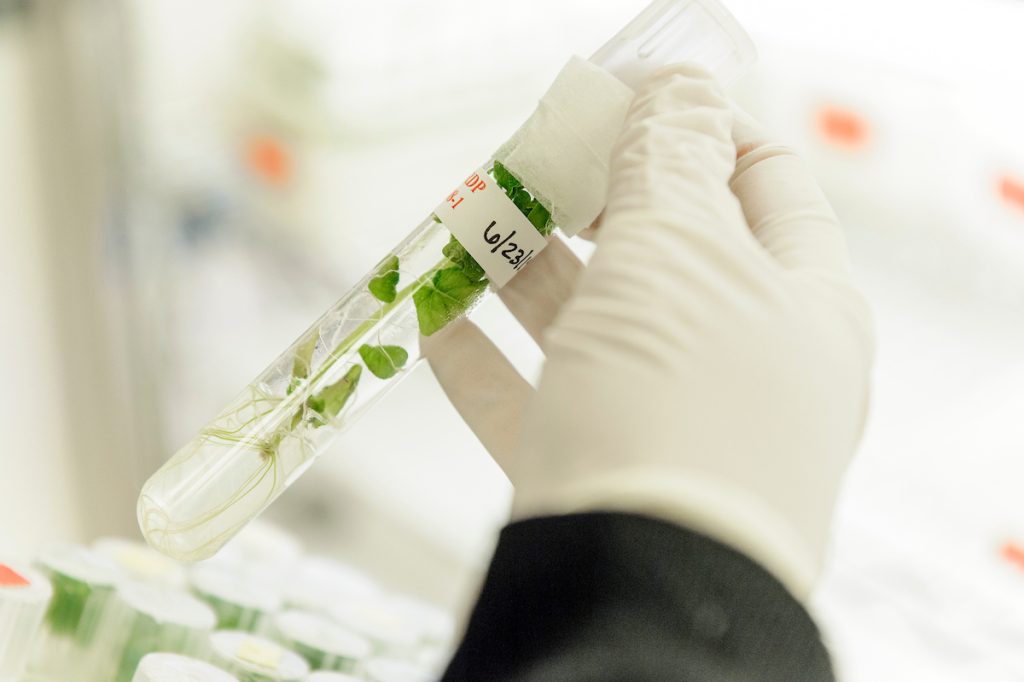
Currently, commercial potato production relies on asexual reproduction, and growers plant tubers instead of true seeds. “If you trace it all the way back, you have these plants in test tubes basically, sitting in incubators or in growth chambers,” says Endelman. “And that’s how all of the potato varieties that we currently grow are maintained.”
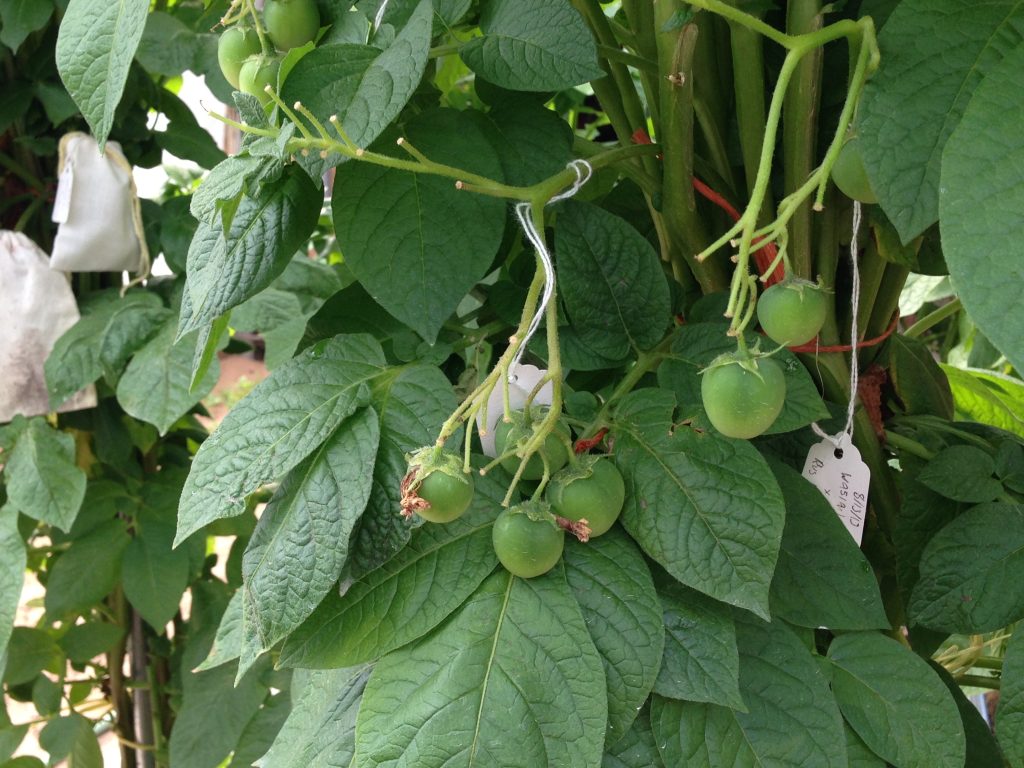
This supply chain process costs a significant amount of time and money while making the plant more vulnerable to diseases. Potato 2.0 CAP strives to change this by creating F1 hybrids from inbred parents, which can be distributed as true seed rather than tubers. To do so, Potato 2.0 CAP will develop potato varieties that have diploid genomes – chromosomes in sets of two – instead of tetraploid genomes.
Researchers can create diploids from tetraploids through a natural pollination technique called haploid induction. Scientists can then breed the diploids to select for desired traits. “With diploid hybrid breeding, you can more easily create these improved inbred lines and then look at different hybrid combinations,” says Endelman.
One of the main goals of Potato 2.0 CAP is to support disease resistance in potato crops. By breeding diploids instead of tetraploids, researchers can more easily pinpoint and introduce disease resistance genes. “Right now, our varieties have resistance to some diseases, but we also rely heavily on pesticides,” says Endelman. “I think that when these diploid hybrids hit the market – and I don’t know if that’s going to be ten or twenty years from now – they’re going to have a lot more intrinsic resistance. We’re going to be able to decrease the pesticide footprint and that’s going to ultimately improve the overall sustainability of the production system.”
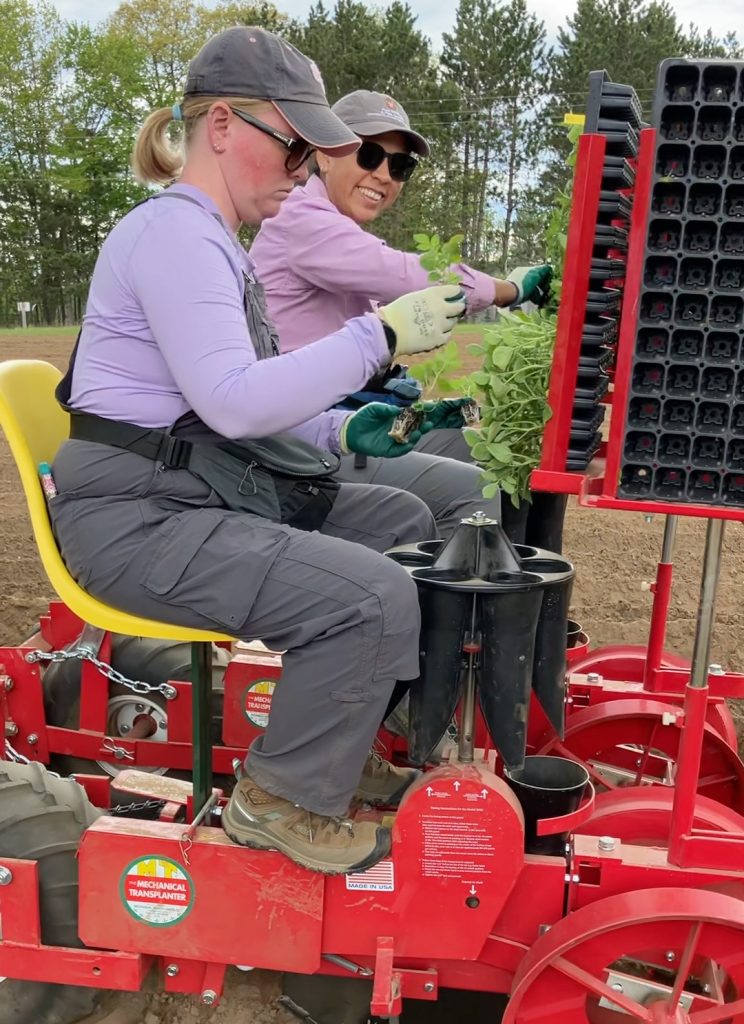
As the project progresses, researchers will work with extension specialists and growers to holistically study these varieties and how they may shape the potato industry. A large focus is supporting growers interested in shifting from planting tubers to starting from seeds. Potato 2.0 CAP will examine best growing practices, from germinating the seeds to pesticide application, in addition to investigating these varieties’ economic implications.
“At the end of 4-5 years, we hope to be closer in terms of the breeding work. I don’t think we’ll have commercial varieties, but we’ll have some partially inbred lines that can be used in the public or the private sector,” says Endelman. “This is meant to bring us closer to this new vision we have.”
While Potato 2.0 CAP is in its beginning phases, the project will eventually publish a newsletter with project updates and research findings. If you are interested in receiving this newsletter, you may sign up here.