
By Audra Koscik
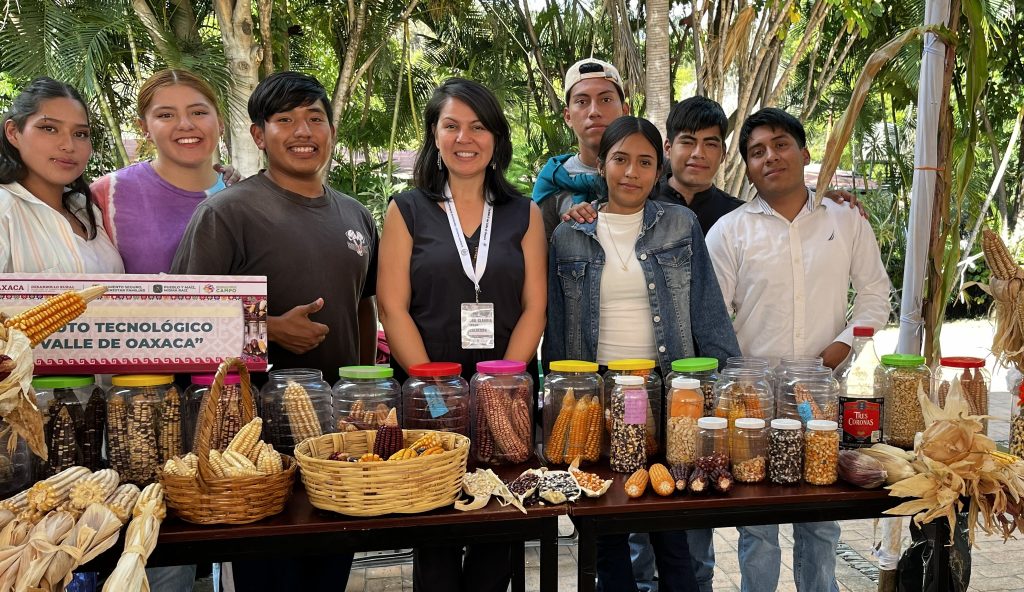
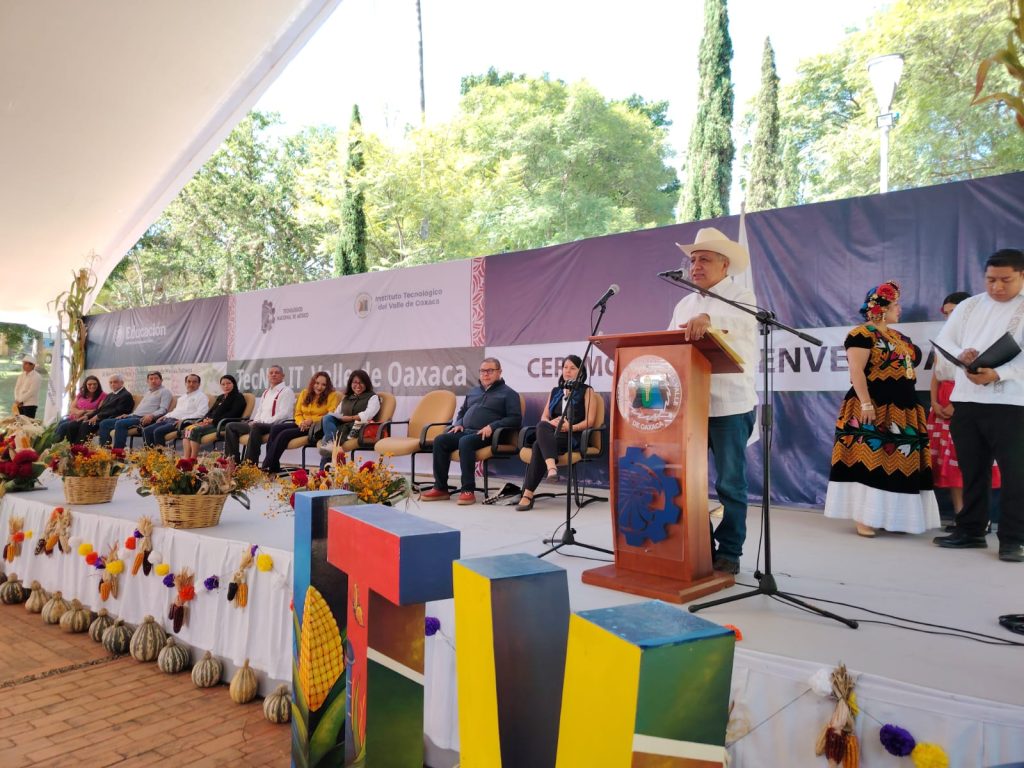
In early November, Claudia Irene Calderón delivered the keynote speech at the XI Reunión Nacional y la I Reunión Internacional de Maíces Nativos (the 11th National Reunion and the 1st International Union on Native Maizes) in Oaxaca, Mexico.
The invitation to present came from Dr. Aarón Martínez Gutiérrez at the Instituto Tecnológico del Valle de Oaxaca (Technological Institute of the Valley of Oaxaca). The conference, cohosted by the Sociedad Mexicana de Fitogenética (Mexican Society of Plant Breeding) and the Instituto Tecnológico del Valle de Oaxaca, brought together students, specialists, scientists, and growers from a wide range of scientific and agricultural fields.
Calderón, a teaching faculty in plant and agroecosystem sciences at the University of Wisconsin-Madison, has extensive experience working with native crops, scientists, and growers. She specializes in agroecology, a field of study that strives to make sustainable and equitable food systems.
Currently, Calderón is working with Indigenous partners in Oaxaca and Wisconsin and with Jean-Michel Ané, a professor in the Departments of Bacteriology and Plant and Agroecosystem Sciences, and Jack Kloppenburg, a professor emeritus in the Department of Community and Environmental Sociology and a founder of the Open Source Seed Initiative. They collaborate on the MaSE (Maize Sovereignty for Everyone) project which studies seed sovereignty, the diverse epistemological perspectives on seed relationships, and the ethical complexities involved in accessing, using, and sharing seeds.
During her keynote speech, Calderón wanted to share the importance of work like MaSE. “As part of our work with Jack and Jean-Michel, we’ve noted that there are considerable ontological differences between Indigenous and commercial or scientific worldviews around seeds,” she says. “Through our conversations with Indigenous partners in Oaxaca and Wisconsin, a path forward requires highlighting the importance of integrating diverse knowledge systems or epistemologies.”
Calderón also provided contextual information on native maize for the audience. “I aimed to highlight the key drivers behind the reduction of diversity in native maize,” she says. “I talked about pressures from the agro-industrial model, national and international policies, consolidation of the global corporate seed market, impact of climate change, displacement of ancestral knowledge, human migrations, aging farming populations, and the disruption of generational knowledge transfer.”
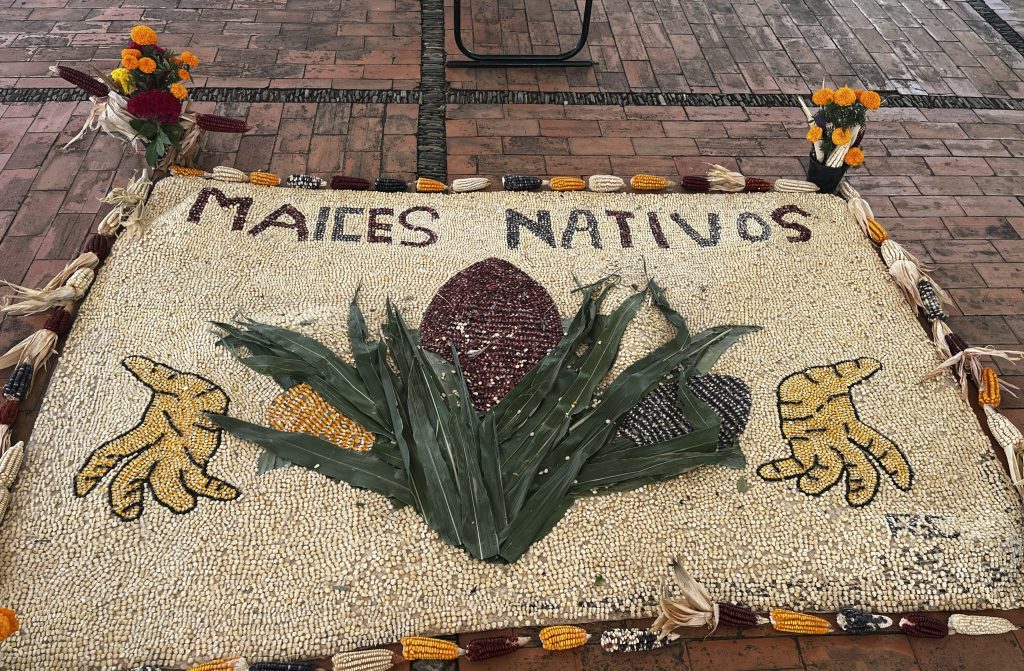
The event focused on maize due to the crop’s importance in Mexico. “Mexico is the center of origin of a diversity of maize,” says Calderón. “It was first domesticated there and later in Central America, before spreading south to the Andes, north into southern Canada, and eventually across the globe – Antarctica being the only continent without maize.”
Given maize’s rich history in Mexico, it holds deep cultural roots. “In Mesoamerican and Native American worldviews, maize is far more than a culinary ingredient,” says Calderón. “It is a cultural cornerstone that is present in origin stories – such as the Popol Vuh for the Maya K’iché for example – cosmologies, rituals and ceremonies.”
“In Indigenous epistemologies, maize is regarded as a ‘relative’, a perspective that is essential to understanding its cultural significance within these cosmovisions,” explains Calderón. “The centrality of maize in Mesoamerican and Native American cultures makes it a powerful anchor to engage in conversations about evolution, diversity, conservation, food sovereignty, and justice.”
Through her keynote speech, Calderón shared research on native maize and emphasized the importance of exploring new avenues for interdisciplinary collaborations. “An overarching goal of my talk was to invite people to zoom out to have a broader perspective on maize, and invite them to expand their networks of collaboration,” says Calderón. “Such collaborations are extremely valuable not only to inspire the future generation of scientists, but also to address the complex cultural and sociopolitical dimensions of maize, a crop central to Indigenous communities in Mexico and beyond.”