
Steven Hall and Jed Colquhoun, researchers in plant and agroecosystem sciences, are partnering with growers in Wisconsin’s Central Sands to find economically and environmentally supportive solutions to prevent nitrate leaching.
By Audra Koscik
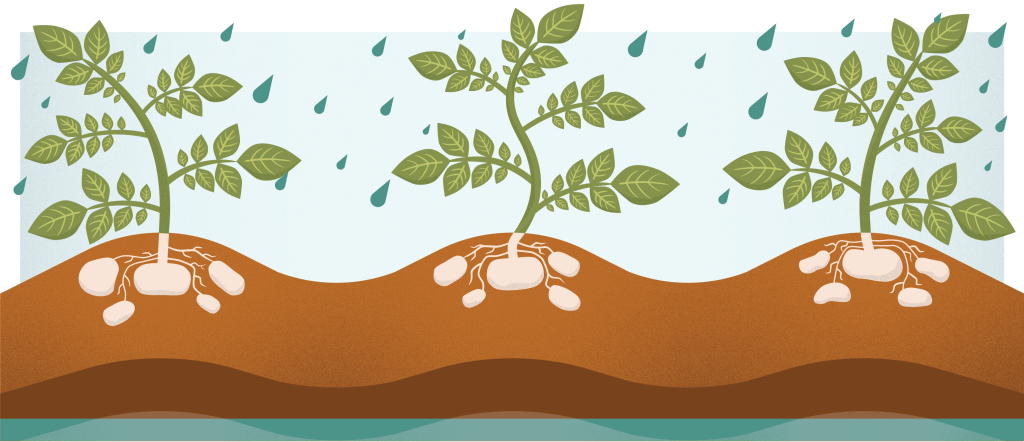
In the heart of Wisconsin, the earth is composed of deep, sandy soil, making it an ideal area to grow specialty crops like potato. This region, known as Wisconsin’s Central Sands, is home to a thriving agricultural industry that generates billions in revenue and provides thousands of jobs. However, the sandy soil also creates challenges as it is prone to flushing fertilizers and pesticides into the groundwater, consequently impacting community and environmental well-being.
Steven Hall and Jed Colquhoun, faculty in the Department of Plant and Agroecosystem Sciences at the University of Wisconsin-Madison, are studying a particularly prominent challenge in the Central Sands: nitrate leaching. Growers apply nitrogen fertilizer to their fields as it is essential for crops, especially nitrogen-loving plants like potato. However, if there is more nitrate than the crop needs, it can leach into the groundwater below.
“One of the challenges is getting both the amount and the timing of that nitrogen application to correspond to crop demand,” says Hall. “If you have a mismatch, particularly on sandy soils, that nitrate is really vulnerable to leaching.” Rain can wash the nitrate past the plants’ roots. “And then it’s essentially gone, from the perspective of the plant” says Hall.
The nitrate can then flow into subsoils and aquifers, and then eventually into wells. And, while nitrate is essential for crop growth, it can be harmful in drinking water. “There are several negative health effects from nitrate,” says Hall. “Pregnant women and children are likely most at risk, but there’s also increasing evidence of other health impacts, such as increases in cancer.”
Given the region’s sandy soils and agricultural context, it has some of the highest concentrations of nitrate in the drinking water in the state. UW researchers, growers, and food production companies are teaming up to understand the issue and find solutions.
To begin their work, scientists including Colquhoun met with growers, industry professionals, and residents. “In all our discussions with rural community members we’ve heard that everyone, including the farmers, wants to protect groundwater quality in the region – it’s the source of irrigation water, drinking water and valued ecosystems that surround agriculture like wetlands, streams, and lakes,” says Colquhoun. Residents also want solutions that support the local agricultural industry. “So, our challenge in this work is to find ways that agriculture can remain a vibrant contributor that allows people to live in the region while also protecting the groundwater that supports it.”
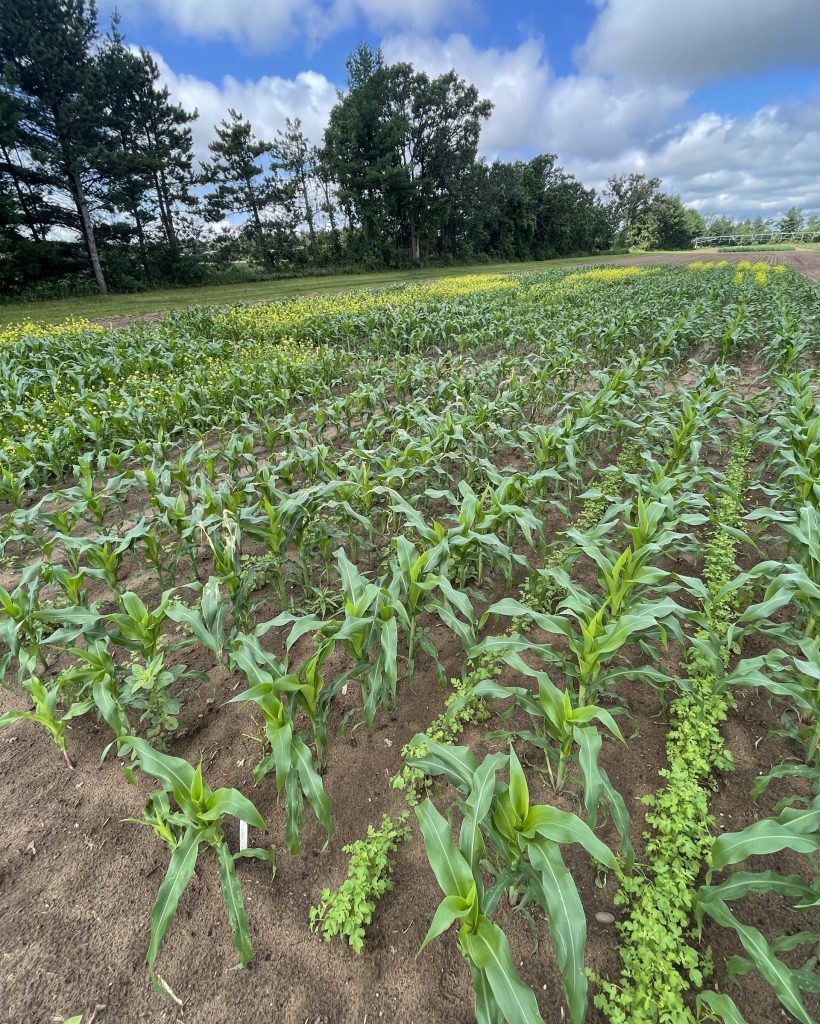
Through support from the USDA National Institute of Food and Agriculture, Colquhoun and Hall’s research teams are studying a variety of agronomically feasible strategies to protect groundwater. One promising method they are investigating is adding plants to crop rotations.
Many growers in the Central Sands already use cover crops which can help capture excess nitrate. In these systems, growers plant a second crop after harvesting their main crop. The cover crop can utilize any nitrate left in the field, store it in its plant tissue, and then release the nitrate come spring for the next crop. “Additionally, we’re exploring ways to further diversify the crop rotations with innovative plants like winter camelina, which can be grown as a winter cover crop and then pressed for use as sustainable aviation fuel,” says Colquhoun.
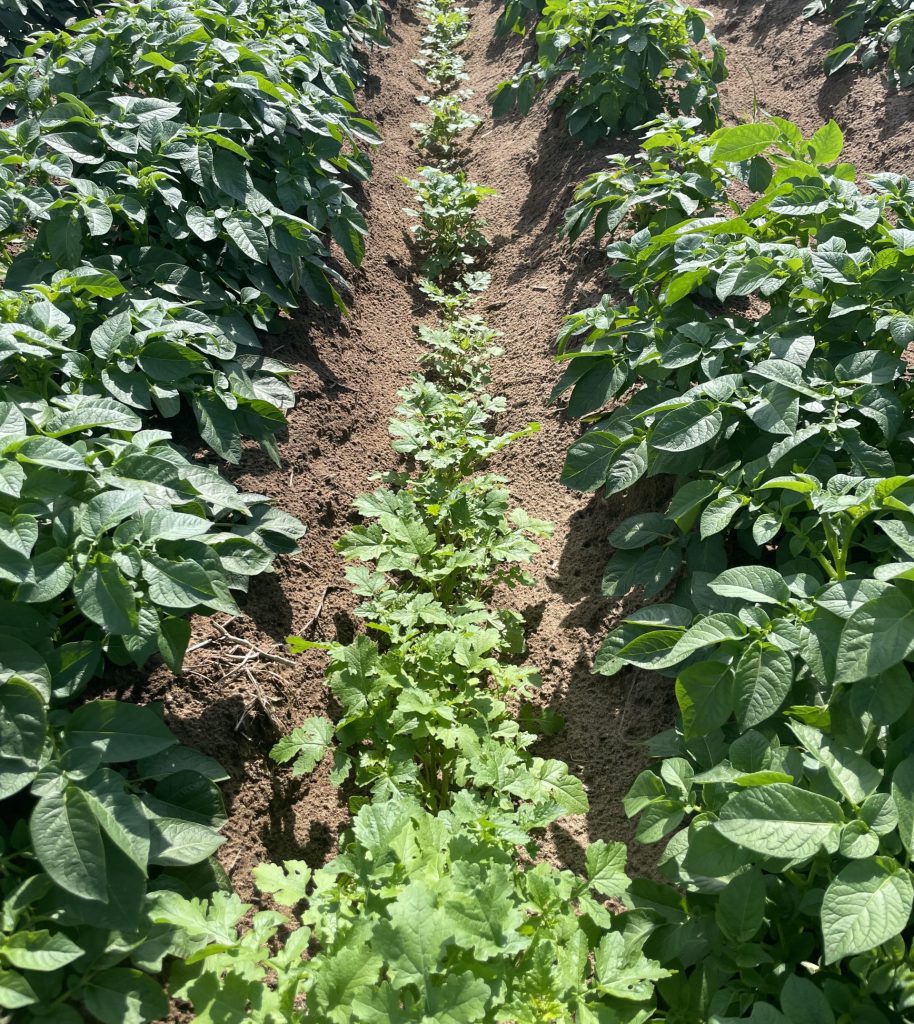
While cover cropping can help catch nitrate post-harvest, nitrate can still leach during the main growing season. Nitrate is especially prone to leaching in potato fields where crops are grown in hills, often allowing water to drain to the furrows and flush nutrients into the groundwater. To catch this nitrate, Colquhoun and Hall are researching the effectiveness of intercropping systems. In these systems, a secondary crop is grown between the main crops’ rows. This secondary crop can scavenge any excess nitrate. “The key here is to use multiple strategies such as in-season interseedings and off-season cover crops to reduce input leaching risks across crop rotation,” says Colquhoun.
To ensure results are relevant to the region, Colquhoun and Hall are conducting research on a network of growers’ fields in the Central Sands. “In each field, we have replicated, large-scale plots where we’re working with our grower partners to compare our innovative groundwater quality protection practices to the standard way of growing crops,” says Colquhoun. They then collect data to study varying strategies’ agronomic, economic, and environmental implications.
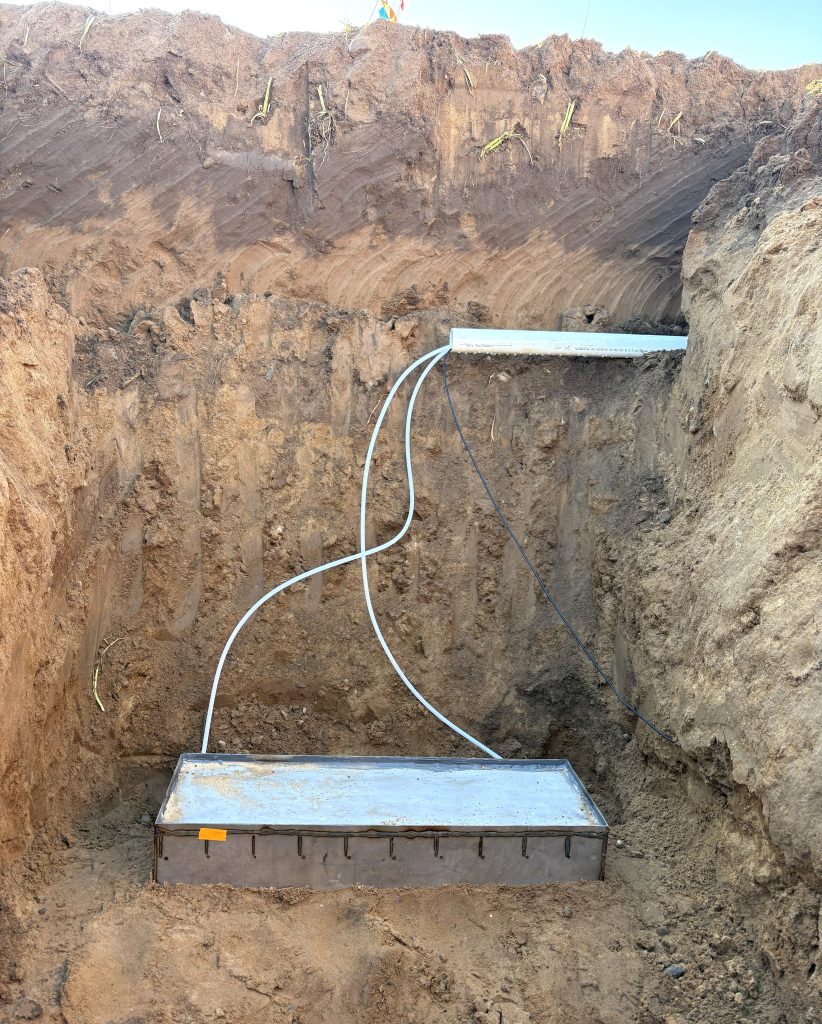
“One of the exciting parts of the work are these lysimeters we installed beneath the farms that are participating,” says Hall. “Those allow us to measure nitrate leaching pretty robustly, and those ideally will be in the ground for many years.” Researchers can then continuously monitor the lysimeters to track long-term trends in nitrate leaching.
While research is still ongoing, Colquhoun and Hall’s scientific teams and partners have already discovered a few promising findings. “Our research team has made great headway in the first couple of growing seasons across a wide range of research topics, ranging from new fertilizer strategies to optimized weather monitoring networks and remote sensing of crop and water status,” says Colquhoun. “We’re now putting those pieces together to make a new suite of production practices that are agronomically feasible.”
Collectively, growers, scientists, food industry partners, and university organizations make a powerful team to support Wisconsinites. “I hope that these efforts allow for a vibrant agriculture to support local communities, while protecting the groundwater that supports all ecosystems in the region,” says Colquhoun.