
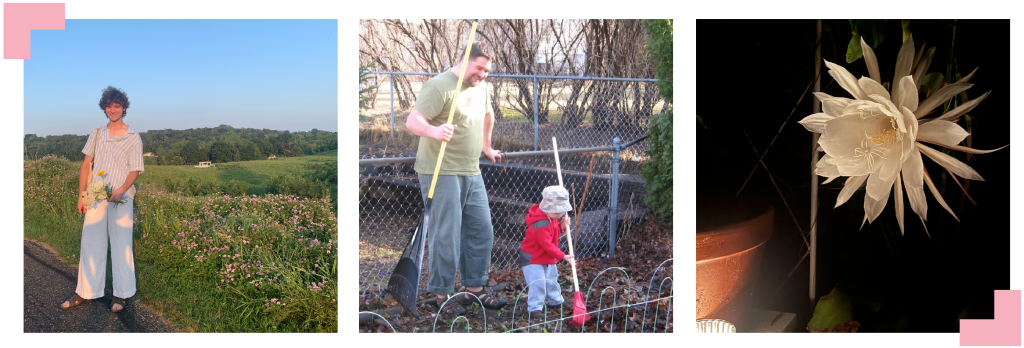
Mason Von Borchardt is an undergraduate student in plant and agroecosystem sciences graduating this spring with a bachelor’s in horticulture. In his three years at UW-Madison, he has worked closely with Allen Centennial Garden, D.C. Smith Greenhouse, and the GreenHouse Learning Community. In his work, he has woven together art and plant science to cultivate gardens and enrich his projects on campus.
What made you interested in studying horticulture?
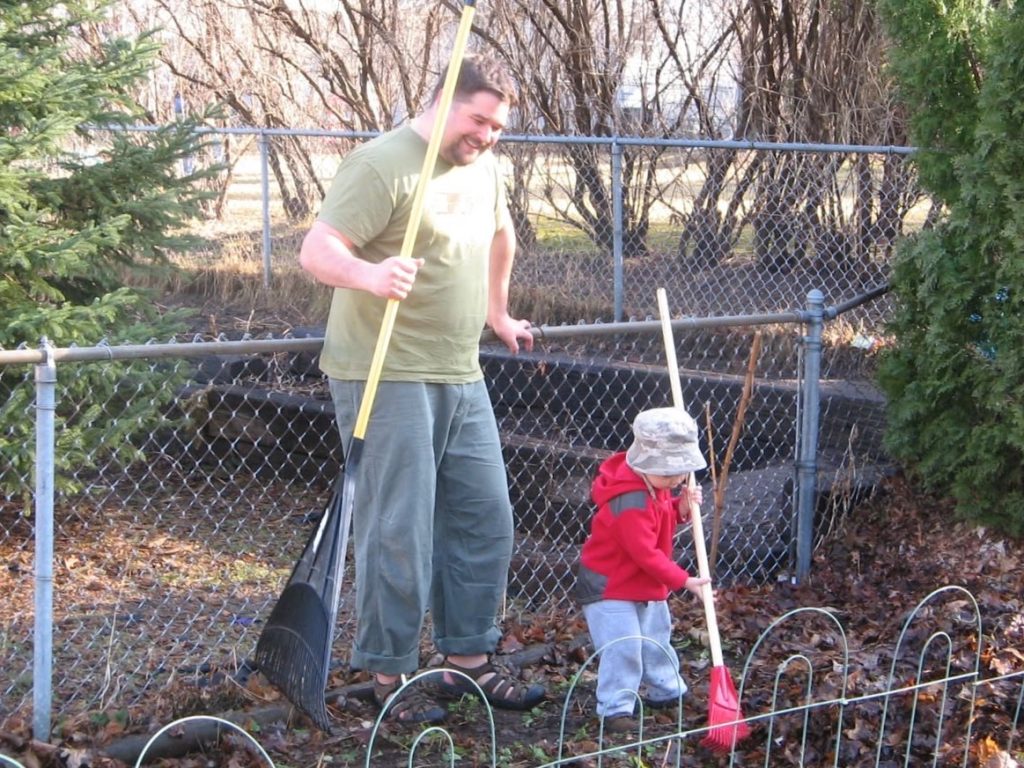
For me, I think it’s always been about plants. As far back as I remember. My mom would say when I was upset as a baby she’d walk with me along the backyard and name all of the flowers to calm me down. So maybe that was the first spark.
What is the most interesting class you’ve taken so far at UW-Madison?
With the current merger in the Horticulture and Agronomy majors, one of the classes I was enrolled in for fall semester ended up not being offered. As an alternative, independent study, I was able to contact various horticulturists around the Madison area and schedule interviews and tours. Two other horticulture majors were able to join me and receive credit for this class. We spoke to some amazing nursery managers, designers, directors, and curators, but a highlight for me was the tour given by Jeff Epping, former director of horticulture at Olbrich Gardens and the designer of the Epic Systems campus. We were given a private tour of Epic, and afterwards Jeff invited me to his talk about gravel gardens at Olbrich Gardens. Overall, it all felt like an amazing opportunity. Horticulture is such a hands-on field, to hear from people who have not only dedicated their lives to it, but worked hard to “push the envelope” was really a formative experience.
In many of our courses, students work on horticulture projects on campus and in the Madison community. What kind of projects have you participated in? And, what kind of impact do these projects have?
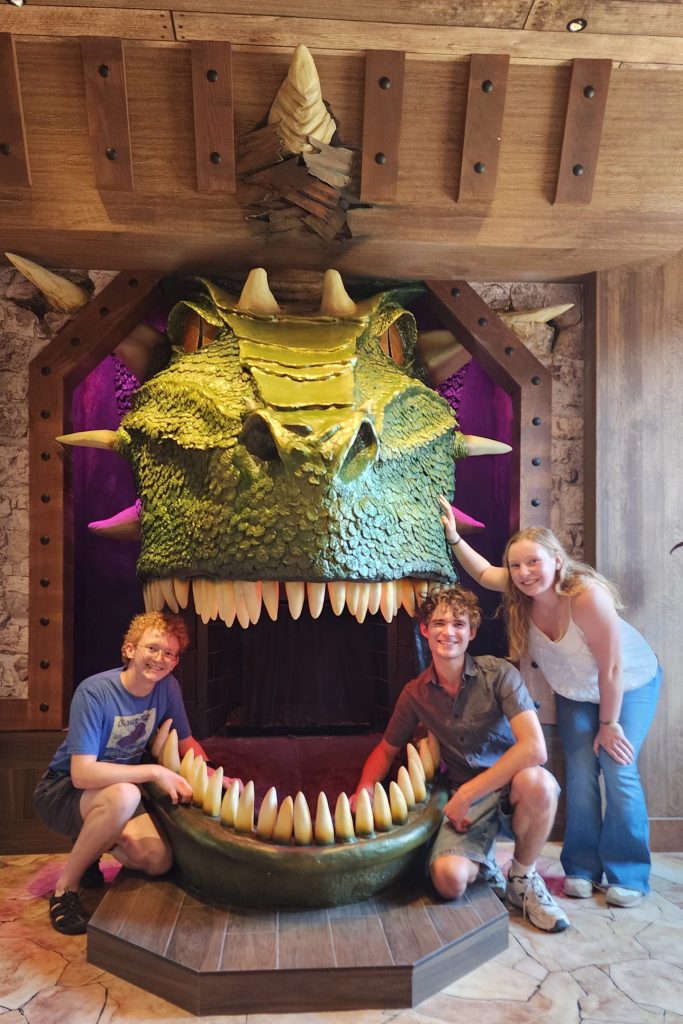
For my senior capstone project, I partnered with the Allen Centennial Garden, a public garden surrounding the historic Agricultural Dean’s Residence. Over the course of the fall semester, I planned a redesign for one of the gardens, which we will implement this spring. In addition to this project, I joined as a weekly volunteer at the gardens, I was able to participate in a lot of fun projects; I moved plants across campus for winter, dug, divided and labelled dahlias, and helped create wreath kits which fund the plantings and programming at Allen Centennial.
I lived in the Leopold Dorms both my freshman and sophomore years as a part of the GreenHouse living community. Freshman year, I was employed as a greenhouse intern managing the Leopold Greenhouse and working at Eagle Heights in the Dining Hall plots, which delivered fresh produce to the dining halls and student housing across campus. Sophomore year, I hosted events throughout the year in the greenhouse, open to anyone in the learning community. I grew over 500 seed starts as well. I shared these with gardeners at Eagle Heights, members of the custodial staff at Leopold, some were planted at the Allen Centennial or in the Horticulture courtyard.
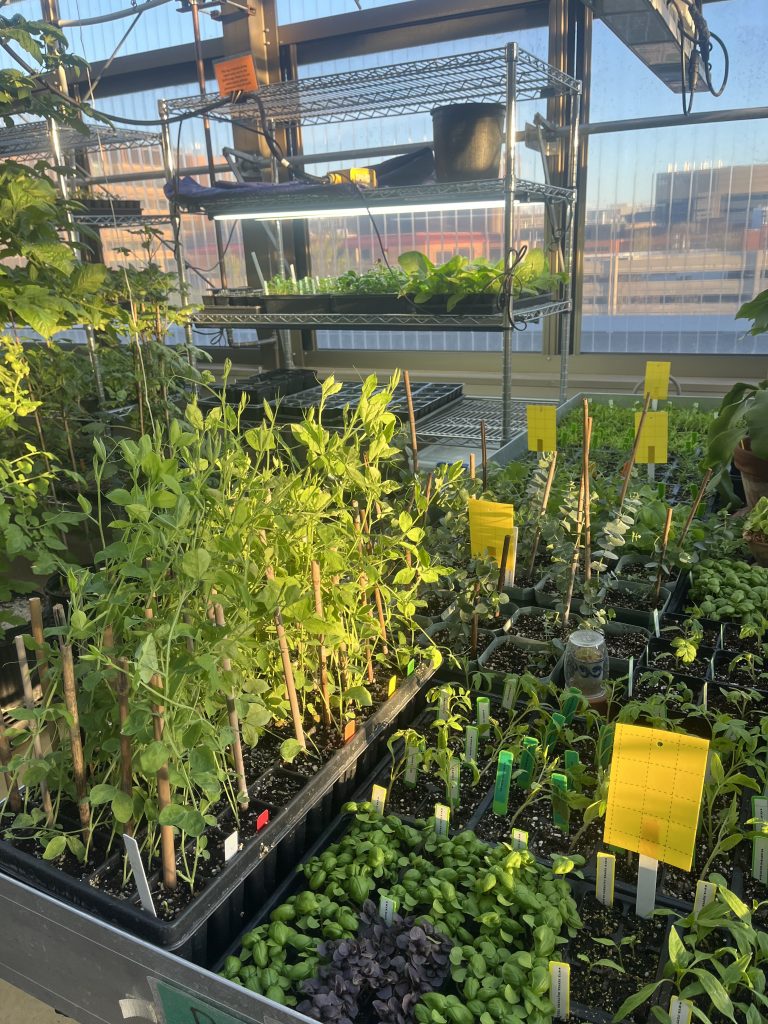
This year, I’m working with Johanna Oosterwyk, manager of the D.C. Smith Greenhouse, to grow flowers for the Horticulture courtyard, using unused greenhouse space. I consulted with Johanna and created a design plan alongside a growing schedule including all of the different species we plan to cultivate. Volunteering fall semester, I worked to implement some of these changes and I plan to be very busy this spring taking care of little seedlings!
I’ve worked doing private practice gardening for 6 years now. I’ve been fortunate enough to pick up a few clients in Madison, usually people who reach out to the department looking for help. I typically go home weekends to work, but it’s always nice when I have time between classes or on weekends that I do stay in Madison. I’ve worked for one woman in particular since my freshman year. I think horticulture is unique in a sense, I think that often people don’t get to see the tangible impact of their work, and how that affects people and communities. I’ve been able to watch her gardens grow and change, her neighbors all know me by name, I feel like I’ve been able to leave something positive there. Even as I look to leave Madison as I finish my final semester, I’m so lucky that my job leaves something real…something that I can be proud of.
Last semester, I contacted our curriculum chair, Irwin Goldman, interested in creating an independent study that would replace a class on woody ornamental plants. With his guidance, I created a curriculum, schedule, and a list of projects that serve as an alternative that satisfies the same graduation requirement as the original course. Some of our planned projects include a landscape design featuring woody plants, a presentation on woody plant identification for horticulture students, alongside tours and volunteer work at the Arboretum with the Longnecker Gardens curator, David Stevens. I even wrangled another horticulture student into completing this course with me this upcoming semester! When it comes to impact, I hope that this experience is able to serve as a sort of model for other students like myself, people who are passionate about plants and want to learn beyond what is offered. I’m really happy that I’m able to extend this opportunity to even one other student.
In a course project for Botany 300, you wove together art and science in a unique educational video. How did you come up with the design for “Game of Thorns”?
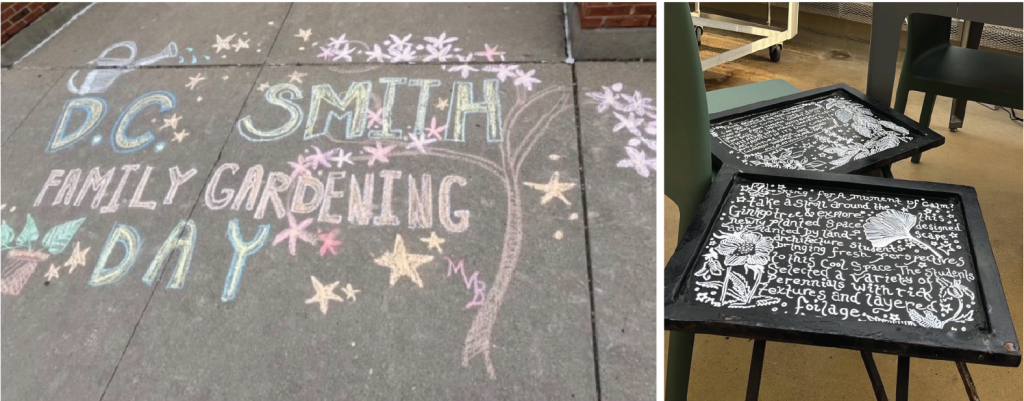
I love art, so whenever I have the opportunity to be creative, I try to take it. My professor for Botany, Marisa Otegui, was so encouraging when I told her my idea for this video. It was really her flexibility and support that let me make what I think was a pretty fun end product. I try to look for opportunities that combine my passions on campus: I painted the signage posted around the Allen Centennial Garden this year and made chalk art for Family Gardening Day at the D.C Smith. Horticulture is a field that lends itself to creativity, I mean, beyond the colors and textures and heights of plants…it’s creative problem solving, a medium that rewards the artistic angle. I think that art and horticulture are inherently intertwined, so it seems intuitive to me to combine those on projects.
In your courses or own horticulture experiences, what is the most interesting plant you’ve worked with and why?
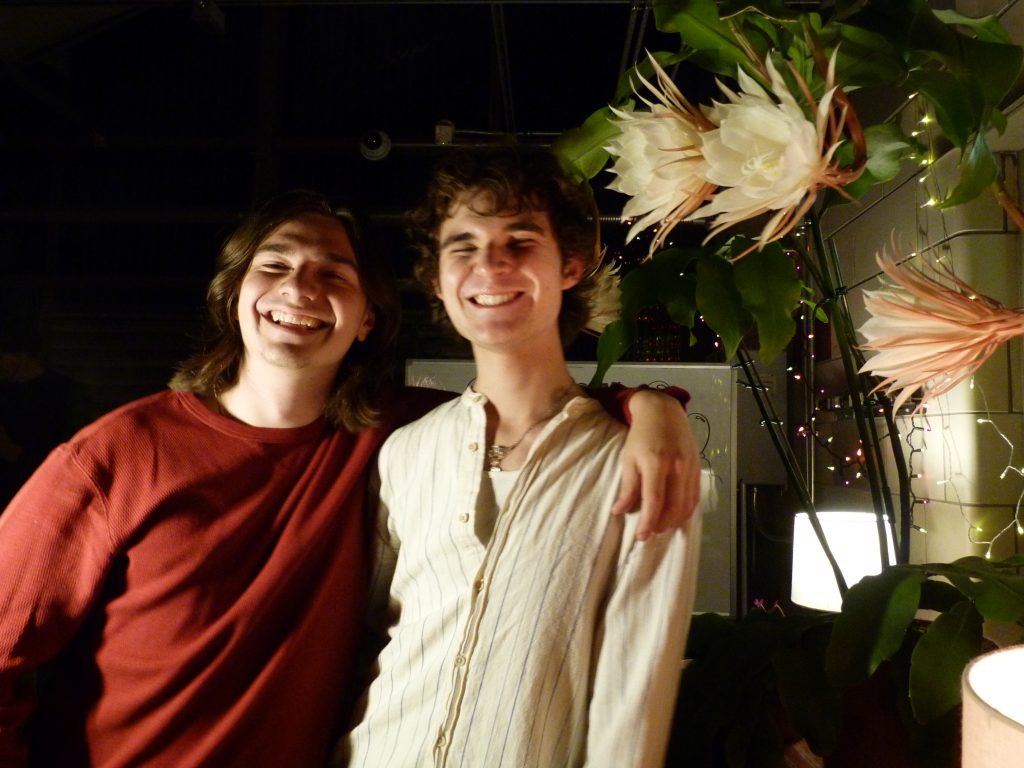
From a “professional” lens, I would probably say roses because I work as a rose gardener. They have such a fascinating history, really no other flower is as entrenched in our cultural consciousness.
My unprofessional answer, however, is Epiphyllum oxipetalum, or the Queen-of-the-Night. It’s a rainforest cactus that has these dinnerplate white blossoms that only bloom at night…the whole thing lasts for less than 8 hours. The flowers smell amazing and really are uniquely beautiful, it’s like they are made out of the lightest, shiniest silk. I bought my plant as a tiny cutting at a nursery in Chatek, Wisconsin. I babied it in the Leopold greenhouse for two years before it first bloomed. When it did, I threw a big party in the greenhouse, open to everyone. We served mocktails, danced and watched it open over the course of the night. I even had a Epiphyllum giveaway where the winners received rooted cuttings in little terracotta pots.
What are you interested in doing with your knowledge and degree in horticulture?
Once I graduate, I plan to go back home and work. I work at a local landscape company, Trillium Landscapes, where I help with pot design, landscape plans, and maintenance. I also work at a wedding venue, Camrose Hill, in Stillwater (my hometown). It’s an outdoor venue with these beautiful, extensive gardens that I’ve just been set loose upon…it’s wonderful. The owner is a florist, which is a side of the industry that I haven’t really learned much about until now. A lot of flowers that are big in floristry aren’t really on my horticultural radar, it’s been fun expanding my knowledge. Finally, I also work as a private gardener and plan on continuing that after I graduate.
A friend and I actually have a trip planned for July to England! We are going to see all of the great gardens: Kew, Great Dixter, Sissinghurst, RHS Wisely. I’m not a big traveler, it will actually be my first time out of the country, but I really am excited…I’m sure it will be life changing.
I think I will always work with plants, passions have ebbed and flowed throughout my life, but my love for horticulture has kept constant. I think that’s the best sign that something is meant to be…I think my life would be very sad without flowers.